


Survey Reveals Rising Concern Over Facial Fat Loss Following Weight Loss
A new research survey discovered that 65% of women are concerned about experiencing facial fat loss in the…

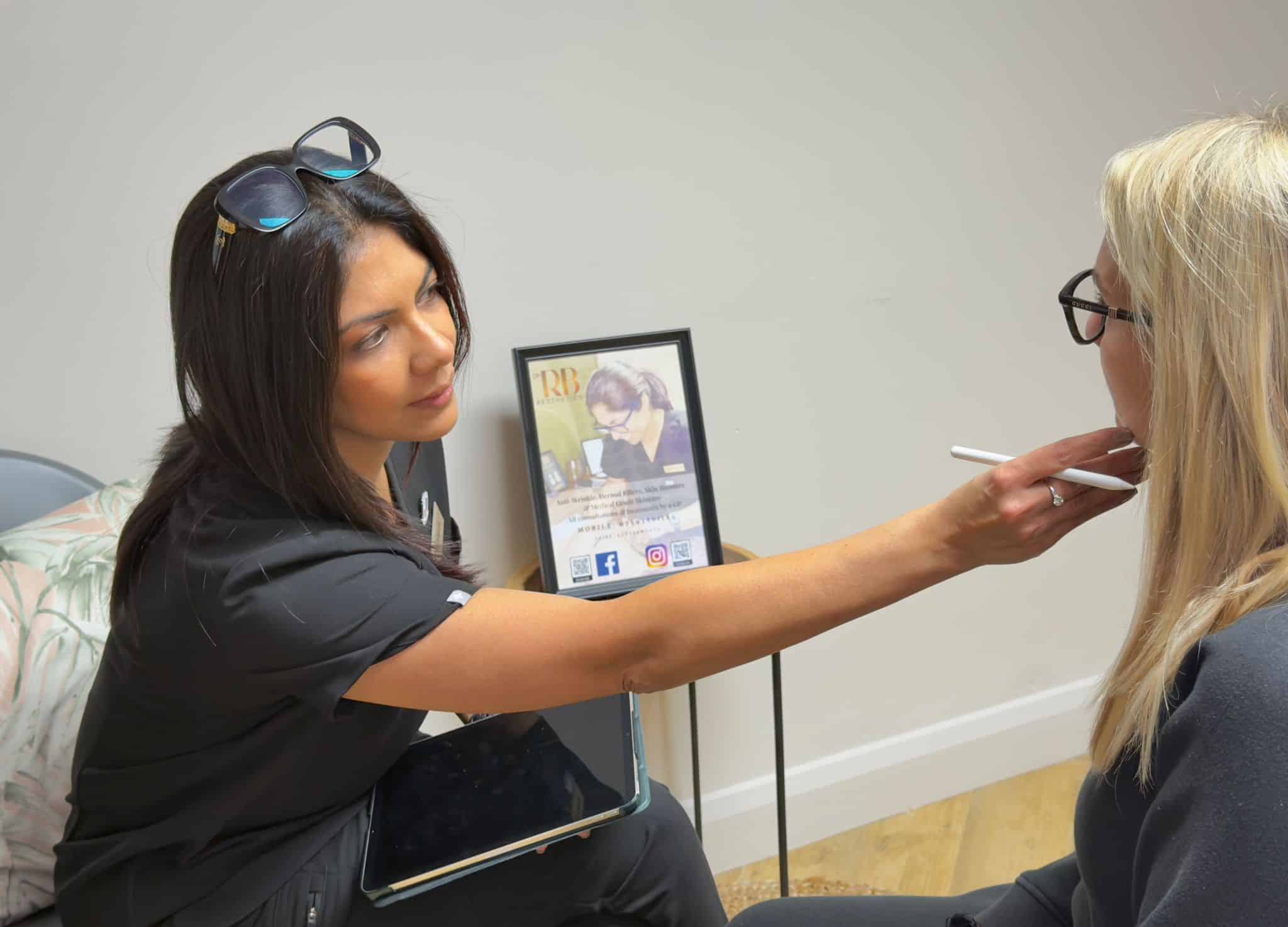
A GP and aesthetic doctor has spoken out against the “dangerous” and “illegal” promotion of hay fever steroid injections after patients revealed they were administered the treatment without proper informed consent or understanding of the potential risks involved.
Dr Ruchira Bhalla has worked as a clinician in the UK for over a decade across both NHS and private practice settings. She has also recently opened a new aesthetics clinic and is an associate doctor of the British College of Aesthetic Medicine (BCAM).
Speaking to The Aesthetics Magazine, she expressed serious concerns over the increasing number of aesthetic clinics advertising so-called “hay fever jabs” on social media.
The injections commonly contain Kenalog, a prescription-only corticosteroid medication that is not licensed in the UK for the treatment of hay fever. Direct or indirect advertising of prescription-only medicines (POMs) to the public is prohibited under UK law.
Despite this, The Aesthetics Magazine has identified several social media posts promoting Kenalog injections for hay fever treatment, including walk-in clinic appointments advertised as quick-fix seasonal remedies. Some of these advertisements have since been reported to both the Advertising Standards Authority (ASA) and the Medicines and Healthcare products Regulatory Agency (MHRA).
Dr Bhalla said she receives regular enquiries from patients asking for the injections after seeing promotions online.
“At this time of year, I get at least one or two calls a week asking whether I offer hay fever injections,” she explained. “Patients see advertisements for quick-fix steroid jabs and assume they are safe and routine. It is incredibly frustrating because there are safer, evidence-based ways to manage hay fever.”
She added that many patients are unaware of the risks associated with intramuscular steroid injections, which can include mood changes, elevated blood sugar levels, adrenal suppression and, in rare cases, avascular necrosis – where tissue at the injection site begins to die.
“Once you inject a long-acting steroid, you cannot reverse it,” she said. “It’s very different from prescribing a short oral course of steroids or a localised nasal spray.”
Dr Bhalla’s concerns are also personal. Her teenage son suffers from severe hay fever and has completed immunotherapy treatment under specialist care.
“We have never gone down the route of steroid injections for him,” she said. “He uses antihistamines, steroid nasal sprays and immunotherapy because that is the correct way to manage severe allergies, by desensitising the body to the allergen over time.”

She stressed that patients often seek injections because they have not received enough education about preventative treatment.
“The key to controlling hay fever is starting medication early, before histamine levels peak,” she explained. “By the time symptoms are severe, patients are chasing the inflammation instead of preventing it.”
One patient who spoke anonymously to The Aesthetics Magazine described attending a clinic for a hay fever injection without fully understanding the risks involved.
The patient said. “Before attending, I was sent a form by email to complete. During the appointment, I was told that this was the last batch of steroid injections they would be offering as they were due to be discontinued soon.
“I am unsure if the nurse administering the injection was a prescriber, and I did not have a detailed discussion about the potential systemic side effects of steroid injections. I was also not advised that the injection being administered was unlicensed for hay fever treatment.”
The British College of Aesthetic Medicine (BCAM) has also voiced concern over the issue.
BCAM Vice President Dr Rebecca Norman said: “BCAM is deeply concerned by the promotion and administration of hay-fever injections by aesthetic clinics. Patient safety must remain the overriding priority, and prescription-only medicines should only be prescribed and administered within robust clinical governance frameworks, in accordance with regulatory standards and evidence-based medical practice.
“Many patients are unaware that intramuscular steroid injections have never been licensed in the UK for the treatment of hay fever, and may not fully appreciate the potential risks associated with these medications before receiving what are often marketed as ‘quick-fix’ solutions.
“We are concerned that convenience and commercial demand should never supersede informed consent, appropriate medical oversight and patient safety.”
A spokesperson from the ASA reiterated that both direct and indirect advertising of Kenalog is prohibited.
“Kenalog is a prescription-only medicine (POM), and it’s against the law and our rules to advertise POMs to the general public,” the spokesperson said. “Advertisers can promote consultations for hay fever treatment, but they mustn’t directly or indirectly advertise Kenalog.”
The ASA confirmed it had previously issued an Enforcement Notice alongside the MHRA regarding the advertising of Kenalog injections and stated that references such as “hay fever injection” or “hay fever jab” are also prohibited.
The MHRA similarly warned that Kenalog is not licensed in the UK for hay fever treatment, although clinicians may prescribe medicines outside their licensed indication if they believe it meets a patient’s specific clinical needs.
“Advertising Regulations prohibit the publishing of an advertisement to the public that is likely to lead to the use of a POM,” an MHRA spokesperson said. “We regularly take action on complaints to ensure POMs, including Kenalog, are not promoted to the public.”
Dr Bhalla believes the issue highlights wider concerns around patient safety and governance within parts of the aesthetics sector.
“These clinics are often offering walk-in steroid injection days because it’s financially lucrative,” she said. “You can have multiple patients lined up every few minutes paying for a quick treatment, but patient safety should never come second to convenience or profit.”
She urged practitioners to redirect patients towards appropriate medical care rather than offering unlicensed quick-fix solutions.
“My message to practitioners is simple: prioritise patient safety and transparency,” she said. “Hay fever management is not a five-minute consultation ending in a steroid injection. It requires proper education, assessment and ongoing support.”
For members of the public, her advice is equally direct.
“Start treatment early, be consistent with it, and seek help from your GP if symptoms are severe.
“If standard treatments are not working, ask for a referral to allergy or immunology specialists. There are safer and more effective long-term options available.”
Gain full access to peer-reviewed protocols, our extensive digital archive, and the Tri-annual print edition delivered to your clinic.
£
250
Per Year
Subscribe
Auto-renews annually. Cancel anytime.
Subscribe to our newsletter for the latest insights from the aesthetics industry.
Subscribe NowA new research survey discovered that 65% of women are concerned about experiencing facial fat loss in the…

Dermatology Aesthetic Nurses Association Ireland (DANAI) has announced the opening of early bird registration for its inaugural Aesthetics…

Leading distributor, Healthxchange has unveiled its new ‘Trust in Aesthetics’ campaign, a values-led initiative designed to champion the…
Performance beauty company, Evolus, has announced the European commercial launch of Estyme® — a new collection of injectable…

As peptide therapies grow in popularity, Dr Ben Coyle, GP & Aesthetics Doctor, at The Goldhill Clinic, explores…
The UK’s Medicines and Healthcare products Regulatory Agency (MHRA) has introduced improved safety warnings for all botulinum toxin…

Compounding pharmacy Roseway Labs has launched Statera, a new 12-week education-led weight management programme. As demand for treatments…

Harpar Grace International (HGI) has announced its expansion into the dental sector, unveiling a new commercial programme designed…

A new purpose-built surgical centre dedicated to skin cancer treatment and advanced dermatologic surgery is set to open…

AMANDA PEARSON With an extensive background in the corporate beauty industry and a passion for supporting business growth,…